Our 4-year graduate-entry MBBS program blends rigorous clinical training with an innovative approach that harnesses the latest scientific knowledge, advanced technology, and early hands-on clinical experience, to produce doctors who are clinically excellent, technology-savvy, innovative, collaborative, and compassionate. It is designed to produce future-ready clinicians who will thrive in their medical careers and address the complex challenges of modern healthcare.
From the outset, students will join a truly integrated curriculum that is grounded in biomedical science and evidence-based, builds up clinical knowledge and skills, and develops professional values and behaviors.
1234The first 1.5 years are predominantly pre-clinical, covering the foundational basis of medicine and core clinical education. Courses blend biomedical sciences, clinical content, social science, and population health. Students are introduced early into the clinical environment with primary healthcare attachments commencing in the first half of Year 1. The early and continuous clinical exposure—including clinical skills laboratories, simulation training, and primary healthcare attachment—ensures students quickly become accustomed to practicing history-taking, examination, and safe procedures with real patients.
Building on the knowledge and skills acquired in the first 18 months, the latter 2.5 years of the MBBS program are predominantly clinical, with most teaching taking place during full-time hospital and clinic placements. During this time students undergo a series of specialty and sub-specialty rotations, enabling them to broaden and solidify their clinical experience, grow their clinical acumen, prepare for practice and readiness for internship.
Throughout the MBBS program, Integrated Longitudinal Themes are incorporated as essential components of students’ education and professional development. Initially introduced as short primer courses to provide foundational knowledge, the themes are woven through subsequent courses with increasing level of knowledge and sophistication as students mature and progress through the program.
The themes cover important concepts, and influential and transformative areas of medicine—to prepare graduates for successful careers in medicine and to provide a strong grounding in the wider aspects of medicine.
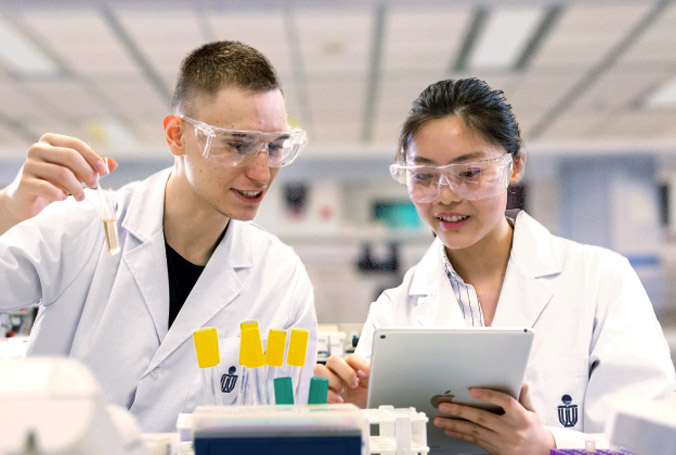
During the MBBS program, students will have opportunity to engage with research activities to enhance their understanding of the role of science and research in medicine, enabling them to stay up to date and engage with research, to know how to answer questions that arise in their clinical practice, and to serve as an introduction to academic medicine. For those interested in expanding their research experience, intercalation of a master's or PhD degree is possible during their studies.
Ranked among the top institutions in the Times Higher Education's Most International Universities, HKUST benefits from its high degree of internationalization and an extensive global network of academic partners.

To empower a global perspective to become a leader in medical education with the highest international standards, the University has been actively forging partnerships in clinical internships, curriculum design, talent development, academic exchanges, and joint research. We have signed agreements with around 40 renowned medical schools, institutions, and hospitals from Hong Kong, the Chinese Mainland and overseas.
HKUST also offers opportunities beyond the MBBS degree, with postgraduate programs that open pathways to diverse and rewarding careers in biotechnology, drug regulation, and advanced life science research across industry, academia, government, and healthcare sectors.

Follow Us


Follow Us